
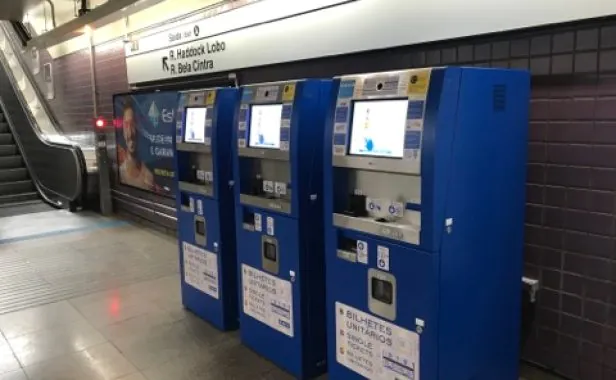
Innovation and modernization are undeniable paths when the topic is urban mobility. Facing the daily challenges created by the population’s need to move using public transport is what drives the management of large companies toward smart and modern cities. Population growth, the increase in vehicle fleets, and the demand for faster and more sustainable travel require increasingly efficient solutions. The mission is to ensure flow, accessibility, and safety, while also optimizing costs and improving user experience. The Urban Population Mobility Survey, conducted by the National Confederation of Transport (CNT) and the National Association of Urban Transport Companies (NTU), reported that in 2024, 31.7% of motorized trips in Brazil were made by public transport.
Mobility truly gains speed and becomes more accessible when Self-Service solutions come into play, simplifying the passenger journey and reducing operational bottlenecks. Technology drives efficiency, cuts costs, and frees teams for more strategic activities. At the same time, it creates a smoother, more intuitive, and safer experience for users, establishing a new quality standard in public transport. Modernization connects people, data, and decisions in real time, enabling fast responses and precise management. This combination ultimately strengthens the role of Self-Service as a pillar of smart cities, where each project is designed to be more practical, integrated, and efficient.
Tecnologia global para projetos de alta performance
Presente em mais de 125 países, a Imply desenvolve soluções integradas que modernizam operações e geram valor. Conte com a segurança de quem é líder em inovação para impulsionar o seu negócio.
Developed to facilitate the ticket purchasing experience for passengers in Brazil’s main capitals, Imply® Self-Service Terminals deliver more than speed. They reduce waiting times, optimize operational and managerial processes, lower costs through simplified operations carried out by users themselves, and expand service areas and offerings in high-traffic locations. They accept multiple payment methods securely. As a result, with the adoption of technology, the average service time per user dropped from 3 minutes at ticket counters to just 30 seconds at Self-Service Terminals.
Technology has proven to be a fundamental ally of Public Transport. Digital and automated solutions make collective transport more agile, transparent, and integrated, connecting people, data, and systems in real time. From operational planning to ticket purchase and validation, innovation plays a decisive role in simplifying passengers’ routines and improving the management of companies and authorities responsible for urban mobility.
Imply® is a leader in self-service solutions for Public Transport in Brazil and supplies Self-Service Terminals that are already part of daily life in several cities across the country. Below are some examples of municipalities that modernized their services with Imply® Self-Service Terminals.
São Paulo – SP
According to the Bus and Urban Mobility Yearbook published by OTM, in 2024 São Paulo’s system transported 2,160,850,434 passengers using a fleet of 13,277 buses across 1,304 operating routes. In 2014, the fare was R$3.00, rising to R$4.00 in 2018 and to R$4.40 in 2020, remaining at this level from 2021 to 2024—an increase of 46% over the period, while inflation between January 2014 and December 2024, based on the IGP-M (FGV), reached 122.44%.
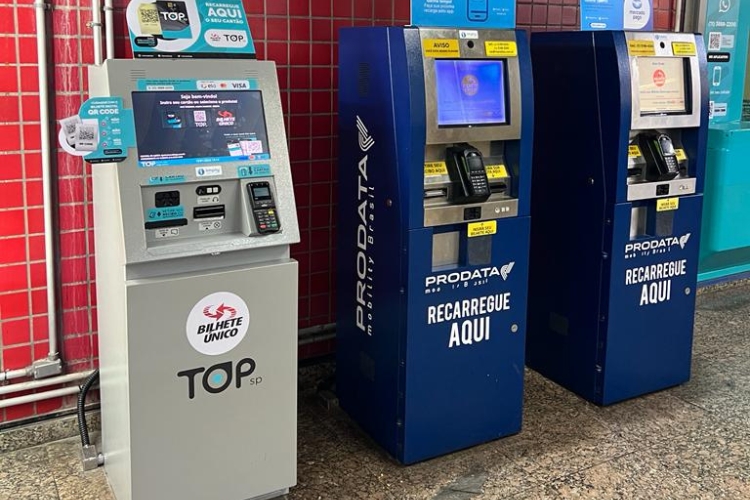
The electronic card known as Bilhete Único is the main integration tool of the transport network, ensuring urban mobility and connections between lines throughout the city. Operated by Autopass and Prodata, companies specialized in mobility and electronic ticketing solutions, it uses Self-Service Terminals produced by Imply. Hundreds of kiosks are distributed across subway, train, and bus stations—São Paulo Metro, CPTM, and EMTU. According to Autopass, an average of 5 million transactions are processed per month, totaling around R$70 million.
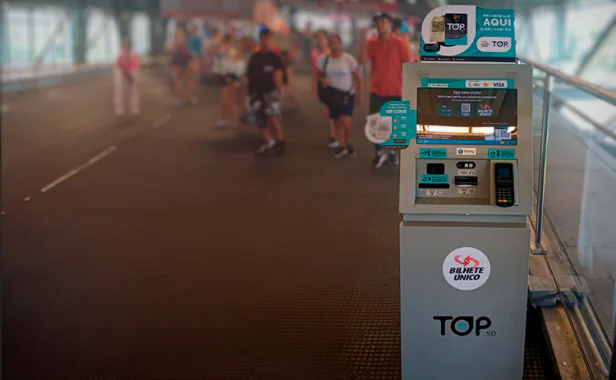
São Paulo has the largest metro-rail network in Brazil. Together, the Metro and CPTM transport 75% of all people who use trains and subways nationwide. Some terminals accept card, Pix, cash, and coins, and also provide change. Users can issue QR Code tickets and reload cards using cash, debit, or credit cards.
Airport transfers also use the system
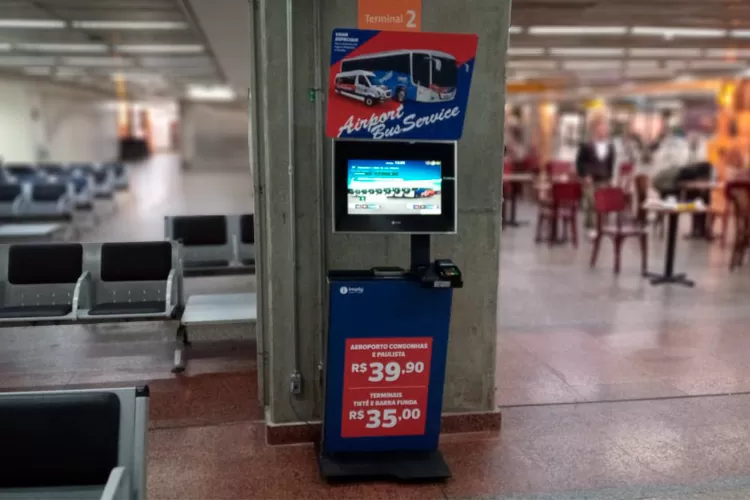
Self-Service also speeds up transfers at São Paulo airports. Grupo Serveng connects Congonhas and Guarulhos airports to strategic points in the city through the Airport Bus Service. To further streamline the passenger experience, the group implemented Imply® Self-Service Terminals for transfer ticket sales, allowing users to purchase tickets easily without facing ticket counter lines.
Campinas – SP
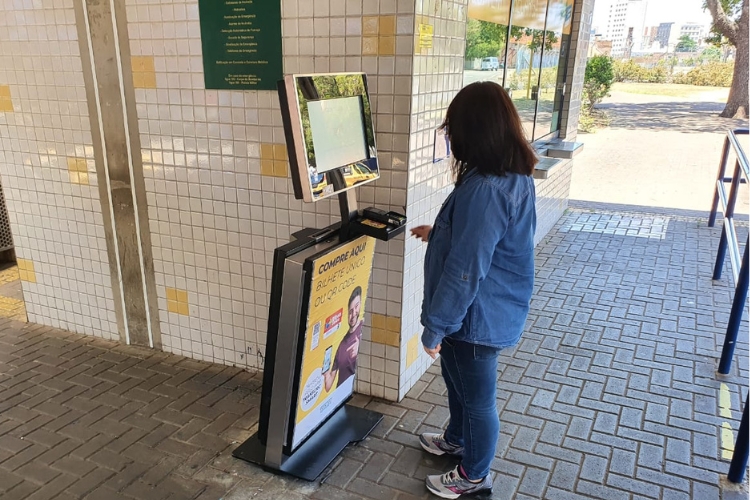
Since 2020, Campinas has also streamlined passenger routines with the installation of Imply® Self-Service Terminals by the Association of Urban Collective Transport Companies. “We have had a long-standing relationship with Imply®. It is a strong partnership that has been very successful,” highlights Sergio Antonio Finatti, IT Manager at Transurc.
Santos – SP
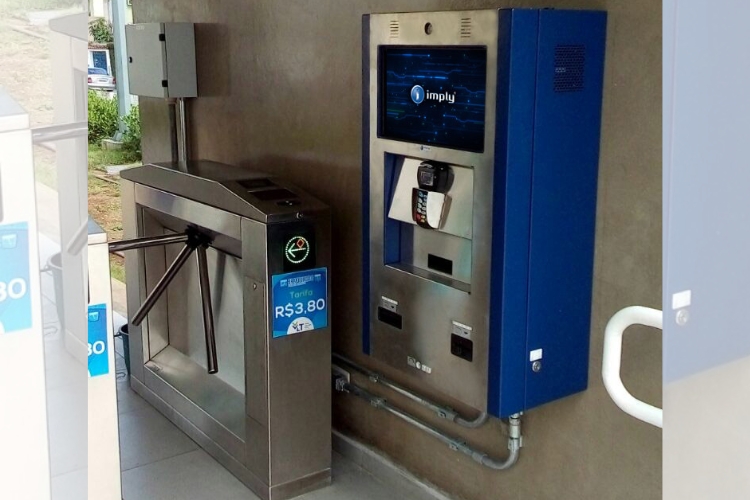
In Santos, Viação Piracicabana and Prodata implemented Imply® Self-Service Terminals to facilitate BR Card recharges for bus and light rail (VLT) users.
Rio de Janeiro – RJ
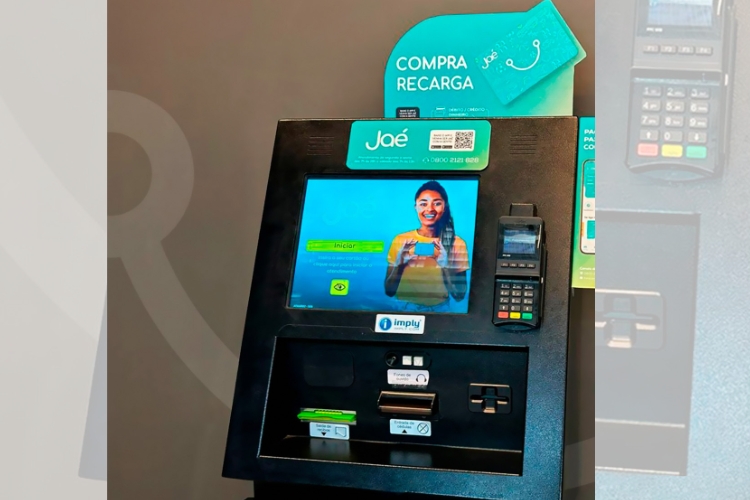
In Rio, Imply® Self-Service technologies are used by Global Mob and Jaé. Data from Data.Rio show that in 2023 the system transported 641,333,000 passengers, a 5.48% increase over the previous year. Fare adjustments and system modernization, including BRT fleet renewal, contributed to a 150% increase in passenger numbers.
Recife – PE
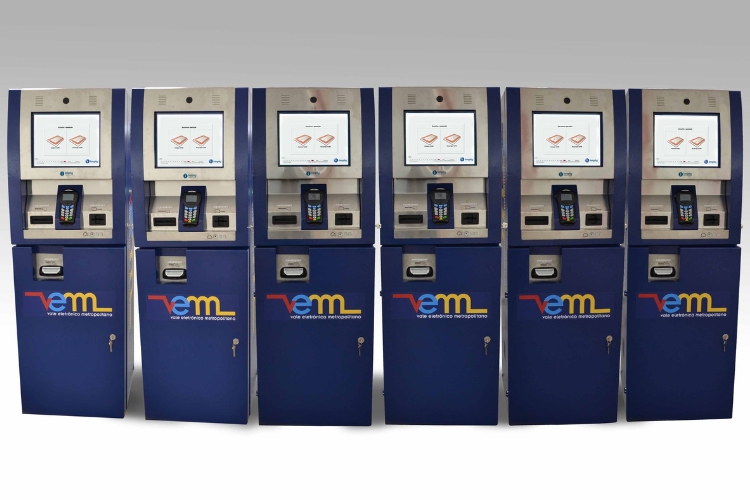
Since 2017, Imply® has supported the Recife metropolitan region by providing Self-Service solutions that enable VEM card purchases and recharges, reducing queues and operational costs.
Belo Horizonte – MG
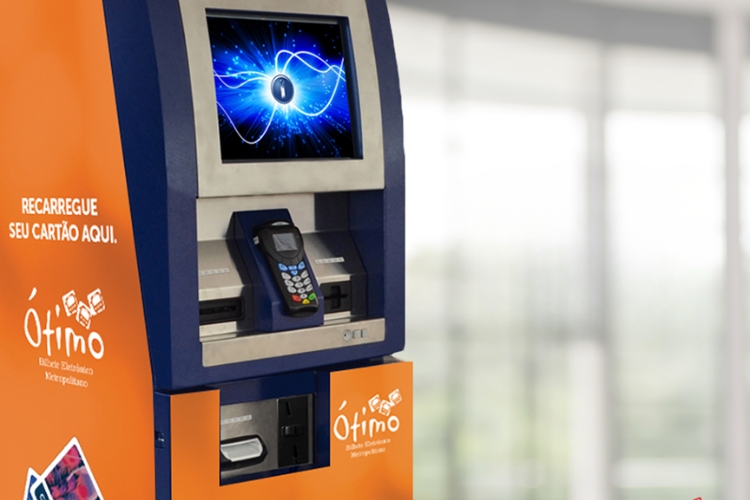
Belo Horizonte transported 274,709,210 passengers in 2024 across 2,783 buses and 296 routes. The city’s electronic ticketing system, in place since 2002, continues to evolve. Since 2020, ÓTIMO has used Imply® Self-Service Terminals to optimize card purchases and recharges with fast and secure payment options.
Learn more about Imply® Self-Service solutions: https://imply.com/engb/self-service-terminals/